



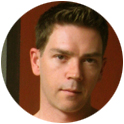
Michael 23 entered the downtown Phoenix art scene in the early 1990s by displaying his art at the IceHouse, including a mural in the space’s parking lot. Inspired to start something himself, 23 opened Thought Crime collective in 1995, which operated until 2005. Following Thought Crime’s closure, 23 opened The Firehouse on First Street, before expanding to found other live-work art spaces Miami Art Works and The Compound. After well over 20 years in the downtown scene, Michael 23 is still widely known as an arts instigator.
An Arizona native, James Angel first entered the Phoenix art scene in 1998. Angel focuses on acrylic paintings, sculptures and monoprinting, often portraying nostalgic, pop-styled imagery. He was one of eight recipients of the Phoenix Art Museum’s Contemporary Forum grant in May 2012. Angel was a founding member of the artist collective 3CarPileUp, which started the annual Chaos Theory art show. Angel mainly shows work in Phoenix and Scottsdale.

Leslie Barton is a stand-up comedian and performance artist who has been featured at spaces including the Torch Theater and the Scottsdale Museum of Contemporary Art. She has performed with bands across Phoenix and acted in both radio and stage plays, while booking shows at both Paper Heart gallery and Modified Arts. She produced and wrote for the Saturday Late Night Series at Space 55 and also hosted First Friday Night Live at the Firehouse Gallery.

Richard and Michele Bledsoe moved to Phoenix permanently in 2000 and 1998 respectively. In 2001, Richard took up residence in his first space on Roosevelt Row, before moving to Citywide Studios on 15th Avenue, serving on the board of Artlink and creating the Phoenix Remodernists Facebook group. Michele first showed her work at monOrchid in 2001, before connecting with Richard to hold studio space at Paper Heart from 2005 to 2007. After the Paper Heart’s closure, the pair co-ran Deus Ex Machina on Grand Avenue with fellow arts couple Jeff Falk and Annie Lopez, before closing the space in December of 2012.
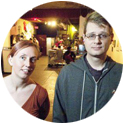
In the early 2000s, photographer Stephanie Carrico and performance artist/poet JRC first came together to run a small espresso cart inside the famed Paper Heart gallery’s first location on Van Buren Street. Then, in 2004, when the Paper Heart moved to Grand, the pair decided to branch out, opening the Trunk Space, a home for alternative art, music, theater and performance at 15th and Grand avenues. While running the venue, Carrico has continued to work as a photographer and teacher at MetroArts, and JRC has maintained a day job while continuing to release experimental music through his record label OneWordLong.

Susan Copeland has been heavily involved in the downtown art scene for many years as an activist, artist and writer. For two years, Copeland served as Executive Director of Artlink and helped to found the Downtown Voices Coalition. As an artist, her work has been displayed across the world in countries including Japan, Russia and the United States, all while she was a teacher of art and English.
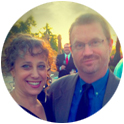
Husband-and-wife duo Cindy Dach and Greg Esser have advocated for a walkable and bike-friendly artist district on Roosevelt Row for more than ten years. The two moved to Phoenix in 1996 when Esser became the Phoenix Director of Public Art. They co-founded the Roosevelt Row Community Development Corporation and renovated several properties along Roosevelt Row, including co-founding eye lounge and MADE Art Boutique. Today, the two focus on their properties along Roosevelt, while Esser is Director of ASU’s Desert Initiative, which maintains an international artist residency at Combine Studios on Garfield Street.
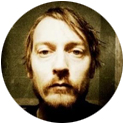
Joey Grether, a.k.a. Joey G, is a downtown fixture and jack-of-all-trades, with work spanning from graphic design to anarchist political writing. He helped found the vegan cafe Conspire and the artistic workspace Fillmore Creative, both now defunct. He developed and contributes to the zine Pholx, which can be found in print and online. Recent projects include a clothing line called Foreign Policy Failures and a newly opened sewing studio at The Hive.

Helen Hestenes joined the Phoenix art scene more than 30 years ago. In the 1980s, Hestenes co-founded CRASHarts, the first alternative art space in downtown, with her then-husband David Therrien. In 1990, the duo started the IceHouse, a warehouse-style gallery still in operation. Hestenes is best known for her immersive, conceptual installation and performance work. Hestenes views installations as “living poetry” and prefers pieces that emulate human passion, whether that be sad, happy or mysterious.
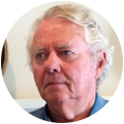
Halldor Hjalmarson operates Hjalmarson Pottery, one of the oldest working art studios in the city. He has been a figure in the downtown Phoenix art scene for nearly 40 years and was one of the original participants in Art Detour. Hjalmarson is a graduate of ASU whose pottery techniques have been recognized in national clay art publications. His studio is located in the Roosevelt Historic District.
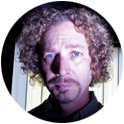
Native Arizonan Joe Jankovsky started taking photographs when he was 15. More than 30 years later, he is a successful photographer who has shown at Modified Arts, the IceHouse, Arizona Testing Labs and the space that is now Tilt Gallery. Over the years, Jankovsky gained esteem for photographing the IceHouse’s famed Phoenix-Mexico artist exchange and numerous other historic shows. The artist is best known for his minimal landscape shots, 3-D graphics and archival printing.
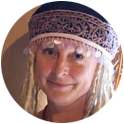
Painter, muralist and performing artist Rose Johnson played a large role in the Phoenix and Bisbee art scenes during the 1980s and ‘90s. IceHouse Co-Owner Helen Hestenes said Johnson was very personal and transparent in her work. One of Johnson’s most famous murals, “The Prayer of St. Francis,” stands on 16th Street near Thomas Road, wrapped around the entirety of the historic Mercer Mortuary. After moving between Phoenix and Bisbee for years, Johnson sadly passed away in 2009 in Bali, leaving behind a vital legacy of evocative art.
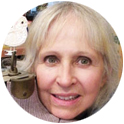
Since the 1980s, Janet de Berge Lange has been a fixture in Phoenix. Moving between a myriad of studio spaces and becoming one of the few local artists to make a splash nationally, de Berge Lange has established a major reputation in the scene she helped build. For over a decade, she maintained a working studio along Sixth Avenue where she crafted her fanciful assemblage pieces. Currently, she is in the middle of picking up and moving to a new home and studio in Miami, Arizona, where she will certainly continue to craft her masterful pieces for showcase across the country.

At age 19, Kimber Lanning opened the record shop Stinkweeds in Tempe. Over a decade later, the entrepreneur and small-business advocate made her first foray into the art world, opening gallery and then-music venue Modified Arts in December 1999. Hosting shows by such up-and-coming stars as Sue Chenoweth, James Angel and others, Modified quickly became renowned for bringing together all parts of the downtown arts scene. In 2009, with the help of a new set of curators, Lanning decided to take the venue into a more arts-based direction, which it has inhabited ever since, hosting a more international array of artists.

For more than a decade, Michael David Little has maintained an active career in both painting and music downtown. Refusing to be overshadowed by his half-brother and artist Steven Yazzie, Little took up residence at such notable spots as House Studios and Holgas over the years, as well as the current 909 House on Fifth Street. Currently, Little keeps active in addition to painting by maintaining his street-parasail, alternately bearing hand-painted ads for Jobot, Aside of Heart and Lawn Gnome Publishing.
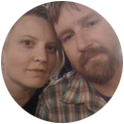
Carrie Marill and Matthew Moore have long been active artists downtown, maintaining studios on Grand Avenue, inside monOrchid and along Roosevelt Row. Moore, a farmer by trade, first burst onto the creative map for his aerial photos of his family’s farm, which he cut into a scale model of the subdivision that would soon take over the land. Marill gained acclaim for her painting, being represented nationally by Lisa Sette Gallery out of Scottsdale. In 2011, the pair purchased the former Holgas building to be converted into Combine Studios, out of which ASU’s Desert Initiative now operates an international artist residency.
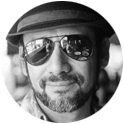
Only residing in the United States since 2000, Ernesto Moncada has dived headfirst into the downtown art scene. Alternately acting as a poet/novelist, actor, improviser and stand-up comedian, Moncada (or his alter-ego, Ernasty, host of Firestage) has become a fixture at any and all downtown performances. Perhaps best-known for his work with experimental theater troupe Arcana Collective, Moncada has pushed the performative boundaries of Phoenix with his warm personality and bilingual reach.
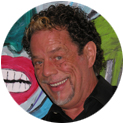
Kim Moody grew up fully ingrained in the native culture as a fifth-generation Arizonan. He endeavored to establish an arts venue that would nurture all arts in “one edgy, emergent, collaborative place.” Thus the Alwun House (phonetically “all-one” House) was founded in 1971. The two-story 1912 bungalow at 12th and Roosevelt streets was created as a non-profit that brought together various groups from poets to musicians and artists. For over 40 years, it has stood as a beacon for visual art, poetry, theater and more in the downtown arts district.
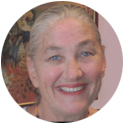
Beatrice Moore opened her first gallery off of Madison and Second streets after moving to Phoenix in 1986. Moore began work on an annual artwalk in 1988 that eventually became Art Detour, which led to the establishment of Artlink, the 501c3 that would go on to run both Detour and eventually First and Third Fridays. As the queen of Grand Avenue, Moore owns Kooky Krafts Shop, Weird Garden Studio and manages several buildings along Grand Avenue for affordable studio, exhibit and small retail spaces for artists and alternative business people.
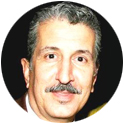
Robrt Pela entered the Phoenix art scene in the late 1980s as a writer and ‘zine editor. Pela is best known for his art, architecture and theatre criticism for the Phoenix New Times and as an essayist for National Public Radio’s “Morning Edition.” Three years ago, due to a self-proclaimed commitment to free work, Pela began curating for Phoenix’s Willo North Gallery. Since leaving that position just last month, Pela already has plans to open his own gallery in the downtown area.

Artist Pete Petrisko first came to the Phoenix art scene in 1989 when he opened Gallery X, a boundary-pushing warehouse space in the south of downtown. He collaborated with artist John Herman to conceptualize the First Friday artwalk, known as the largest monthly artwalk in the nation, after the success of the inaugural Art Detour in 1989. After a seven-year break in gallery management, Petrisko became the co-director of Crisis Gallery with Jake Martinez in 2003. He currently works on his blog Odd Man Out and with the dieselpunk group RPM Orchestra, staying active in the downtown Phoenix community.
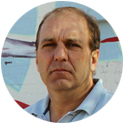
A Phoenix native, Wayne Rainey has been a professional photographer for 23 years, featuring his work in such places as Bentley Gallery and on the cover of Skymall. Since 1999, Rainey has owned and operated monOrchid, a multi-use photo studio, co-working space and art gallery in downtown Phoenix. And from 2002-2010, Rainey also maintained Holgas, a live-work art space and affordable housing project, all while keeping an impressive photography portfolio.
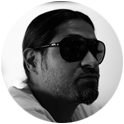
Blending Native symbolism with postmodern conceptual forms, Hector Ruiz is one of downtown’s greatest artistic assets. Having exhibited his sculptures and paintings at the All City Show in New York City, the Smithsonian National Museum of the American Indian, and locally at Bentley Gallery, Phoenix Art Museum and Heard Museum, Ruiz has had every opportunity to make his exit. Instead though, the artist has stayed entrenched at his Chocolate Factory studio on Grand Avenue, even occasionally hosting public exhibitions in his space.
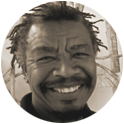
Joe Willie Smith’s work is not traditional - not traditional for the Phoenix art scene, or anywhere else. Working primarily with found objects, Smith has captivated viewers for years with his found-object instruments and furniture, leading to exhibitions at eye lounge and Bentley Gallery. More recently, to accompany his personal work, Smith has instructed a class at Phoenix College entitled “Urban Field Studies: The Art of Finding,” teaching students to utilize found materials in their art.
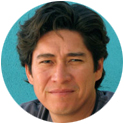
Steven Yazzie first displayed his art in 2000 at the Gallery of Contemporary and Indigenous Art in Tucson. In the time since, Yazzie’s work has spread far and wide, contributing paintings to shows at the Heard Museum, Alwun House and even reaching the Museum of Modern Art in New York. Though an internationally-showcased painter by trade, Yazzie is currently pursuing a bachelor’s degree in Intermedia at Arizona State University, focusing on film and video art.