


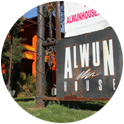
Since its inception, the historic Alwun House has been known as the first non-profit art gallery, alternative theater, coffee shop in Downtown Phoenix. Artist Kim Moody founded the gallery in 1971 to create a safe haven for artists of all media to showcase their work. The gallery is known to exhibit provocative art, including its long-running "Exotic Art Show." Gardens surround the house, while inside work is presented in the ground floor and the basement. For its latest project, the Alwun House Foundation is fundraising to create multi-use Green Art Park next door in what is now a vacant lot.
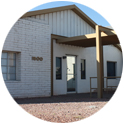
During the late 1980s, according to many, CRASH was the only reason to head downtown after dark. The largely-outdoor art space hosted massive installations and performances from such legendary groups as Skinny Puppy, RuPaul and Laibach. Founded by then-husband-and-wife team Helen Hestenes and David Therrien, later of the IceHouse, the multi-use venue pushed boundaries in a professional way unlike any space before it. While it burned brightly, CRASH was eventually forced to close due to an issue with parking, though the space was famously able to avoid police or fire involvement due to the location’s industrial zoning.
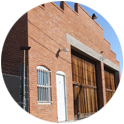
From 1992-1995, deCompression Gallery served as one of downtown’s few fully-professional gallery spaces. Along with hosting a myriad of installations and traditional gallery shows, drawing national attention, deCompression acted as the first downtown renovation by current Warehouse District advocate, property owner and developer Michael Levine.
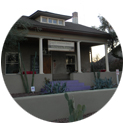
Eleven East Ashland was a historic home located off Central that doubled as a gallery. Founded in 1986, the spot showed mediums including photography, sculptures, videos, music and mixed media. One of its popular exhibits was “For Adults Only,” an annual show featuring mature content that started in 1997 as a counterpoint to the “Exotic Art Show." For the exhibit’s fourth anniversary, it showed 40 artists from 18 states. In 2003, the building housing the gallery was relocated to near McDowell Road and Seventh Street, but it has since closed.
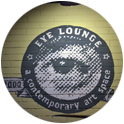
This artist-run collective venue got its feet wet showing at The IceHouse and Mesa Contemporary Arts before planting its roots in a permanent venue in 2001. The eye lounge shows art from multiple mediums and varied subject matter. The space has become known as an incubator for Arizona’s top art talent, claiming such former members as Jen Urso, Brian Boner, Sue Chenoweth, Cindy Dach, Joe Willie Smith and Christy Puetz.
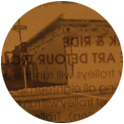
The Faux Cafe was home to many of downtown Phoenix’s most prolific artists, including Robert Anderson, who painted the mural on Planet Earth Theater and co-founded The House Studios, and Peter Conley, now the executive director of the IceHouse. The Faux Cafe was located on Central and Madison next to the America West Arena, notably hosting open houses on game nights, hoping to attract passersby. The Faux Cafe closed during the early 1990s, and was the last space rumored to hold panels of Keith Haring’s storied collaborative mural with South Mountain Community College.
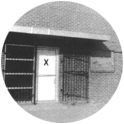
Gallery X opened in 1989 and focused on performance art. Blaz Gallegos and Pete Petrisko organized many of the underground shock-and-awe-themed parties hosted at the gallery. Here, Phoenicians loosened their grip on societal rules and let go to the beat of the music. While only open until 1993, the gallery’s legend lives on, though the structure in which it existed was torn down in 2007.
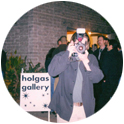
In 2001, when Roosevelt Row was rough and the art scene was merely budding, artist
Wayne Rainey converted an empty apartment building into Holgas, a gallery and live/work space for multiple artists. The plain building inspired the name Holgas, a plastic Chinese camera. “It was a crappy looking shell but beautiful imagery came out of it,” Rainey said. Holgas was a temporary stop for new artists. In 2011, acclaimed Phoenix artist Matthew Moore bought Holgas and turned it into Combine Studios, before partnering with Greg Esser and ASU’s Desert Initiative to make the complex a residence for international artists.
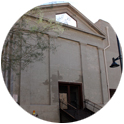
Aptly named, the building housing the IceHouse opened in 1920 as Constable Ice & Fuel selling 300-pound ice blocks to serve the railroad. The space, a golden child of adaptive reuse, uses its large, warehouse-style open floors and high ceilings for large-scale, installation and experimental works. Helen Hestenes and David Therrien turned the building into an arts space in 1990, and it has operated as such ever since.
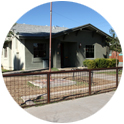
The Lost Leaf and Emerald Lounge provided a high-class mix of art and performance in a historic brick building on the corner of Seventh Avenue and McDowell Road, inhabiting the spaces that now house Starbucks, P.F. Chang’s and SideBar. The Lounge hosted burlesque performances and early shows from such nationally known artists as DeVotchKa, while the Lost Leaf became known as the more laid-back art lounge. In the mid-2000s, the Emerald was forced to close, causing the Lost Leaf to relocate to Fifth Street on Roosevelt Row.
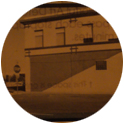
Madison Street Studios provided the impetus for the first Art Detour when Beatrice Moore began a small art open house in 1988. Though Madison Street Studios was demolished to make way for the Phoenix Suns Arena Project in the late 1980s, Art Detour has lived on in a yearly event held across downtown Phoenix.
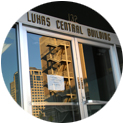
Movimiento Artistico del Rio Salado, commonly known as MARS Artspace, was founded in 1978 by a group of Chicano and Native American artists. The artist cooperative moved from space to space until settling in Central Phoenix in 1981. The gallery featured work by Arizonan, Mexican-American and Chicano artists. La Phoeniqueria, an annual local art show, was one of MARS’ most popular exhibits. The gallery closed in 2002.
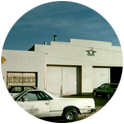
Metropophobobia was a hub of interaction for all kinds of artists. In the 1990s, the space catered to both artists and musicians, including proprietor Peter Ragan. The “bobia,” as it was called, held many musical improv nights throughout the decade, mostly in the electric-acoustic genre. Its music and art became a staple of the Art Detour scene, with its final location being what is now Modified Arts.
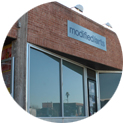
This combination art gallery, music venue and performance space, known by many as the pioneering space of Roosevelt Row, opened in December 1999. Established by Local First Arizona founder Kimber Lanning, the venerable space hosted such legendary bands as Arcade Fire, Blonde Redhead and Godspeed You! Black Emperor. In 2009, the venue refocused its energies into primarily an art gallery, with occasional fine-art performances, rather than the other way around.
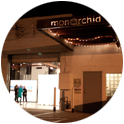
A Roosevelt Row staple, the building housing monOrchid was purchased by internationally renowned commercial and art photographer Wayne Rainey in 1999. The adaptively reused space became home to photography shoots from some of the largest companies in the world, before transforming into a multi-use studio space for everyone from architects to graphic designers to artists, all the while hosting unparalleled art exhibitions every month.
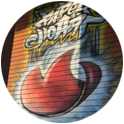
The Paper Heart was a gallery, music venue and performance space for six years. Founded in 2001 by Scott Sanders in a space on Van Buren Street, Paper Heart hosted events ranging from concerts and movies to spoken-word poetry and improv shows. In 2004, the art space moved to its trademark location inside the Quebedeaux Building on Grand Avenue. Sadly, the art space struggled in its larger, architecturally significant space. Community members fundraised to save the financially starving space, but it showed its last exhibit Dec. 7, 2007.
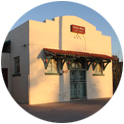
The Paulina Miller Gallery on First and Roosevelt streets showcased local and national art for over a decade, becoming a cornerstone of the local scene and functioning as one of the few professional gallery spaces in the area. It was a focal point of both Art Detour and First Friday and received a 2010 American Art Award for Prestigious Galleries. The gallery stopped hosting regular exhibitions in 2010 before the building went up for lease in 2011.

The Planet Earth Theater on Second and Roosevelt streets was known for its quirky nature, eccentric interpretations of classic plays and colorful murals since it opened in 1992. The warehouse theater was owned by Peter Cirino and his wife Mollie Kellogg-Cirino until 1997 when the two moved to Seattle. The theater continued operating under the leadership of Greg London until 2000, when it was evicted. Shortly thereafter the building was demolished.
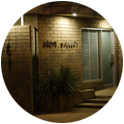
Through the early 1990s, alongside deCompression Gallery, Radix served at the dignified front of the downtown-arts line. Operated by John Chonka, now an architect whose offices are on the premesis of the former gallery, Radix held sway with early shows by Jim Cherry, Bob Adams and even Mayme Kratz. Unfortunately, the gallery shuttered its doors nearly 20 years ago, but its space still bears the strong lettering that marked it in its heyday.
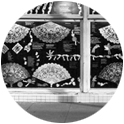
In 1992, after being forcibly moved from the Warehouse District to make way for the Phoenix Suns’ arena, Beatrice Moore hunkered down on Grand Avenue and bought her first buildings. Soon after, in 1994, Moore opened Stop ‘N Look, a storefront gallery designed as a way to engage the public on what was then a very desolate street. Offering 24/7 visibility to students, amateurs and professionals, the gallery has stood the test of time, still gazing at passersby from its colorful windows.
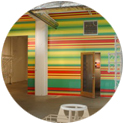
In 2001, Kathleen Thomas opened the 3,000-square-foot, high-ceilinged Studio LoDo in the Warehouse District. The gallery constantly changed as Thomas encouraged emerging artists to use the space as an extension of their own studios. The space showed installations, videos and performances. After struggling with health issues and difficulties in creating a nonprofit, Thomas closed the studio’s doors during the late 2000s.
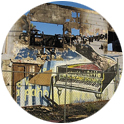
Starting in 1994 as a salvaged drug-and-packrat house, the House Studios served as a live/work hub for up-and-coming artists in the downtown Phoenix scene. Sitting on Fourth Street, the main house and its two-story carriage house hosted a number of major artists, ranging from half-brothers Steven Yazzie and Michael David Little, to David Carmack Lewis. Though the House closed in 2007, the structures remained, murals intact, until 2009 when a suspicious fire rendered the whole complex a loss. Briefly, some of the boards from the house were recycled along Fifth Street as HoodRide gallery and bodega’s “TreeJay."
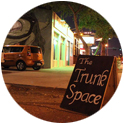
The Trunk Space represents the melding of musicians and artists. The gallery walls are rarely bare of art and the multipurpose stage is rarely bare of performers. The music shown at Trunk Space is varied and specializes in the unique and unconventional. Owners JRC and Stephanie Carrico opened the gallery in April 2004, after operating an espresso cart for a few years inside the Paper Heart gallery.
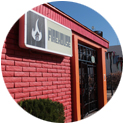
The Firehouse has it all – artist living space, art gallery, retail, bookstore and a cafe. The gallery focuses on collective production, as the live-in artists work together to organize art shows and gain exposure. Michael 23, director of the Firehouse, founded the space after the closure of the long-running Thought Crime collective on Central Avenue, which was bought out to be converted into an office building in 2005. More recently, the Firehouse has become known for its “Phoenix burn," run every Art Detour on Saturday night.
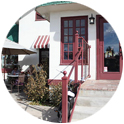
During the 1990s, following the heyday of the Warehouse District and prior to the rise of Roosevelt, the Willow House hosted poetry slams, open mics and concerts all within a thriving coffee-shop setting. Notable performances included the first concert by the now-nationally-known Andrew Jackson Jihad, and the first public performance of JRC, current co-owner of the Trunk Space. Unfortunately, following rent disputes the business moved near the Capitol before closing for good in the late 2000s.